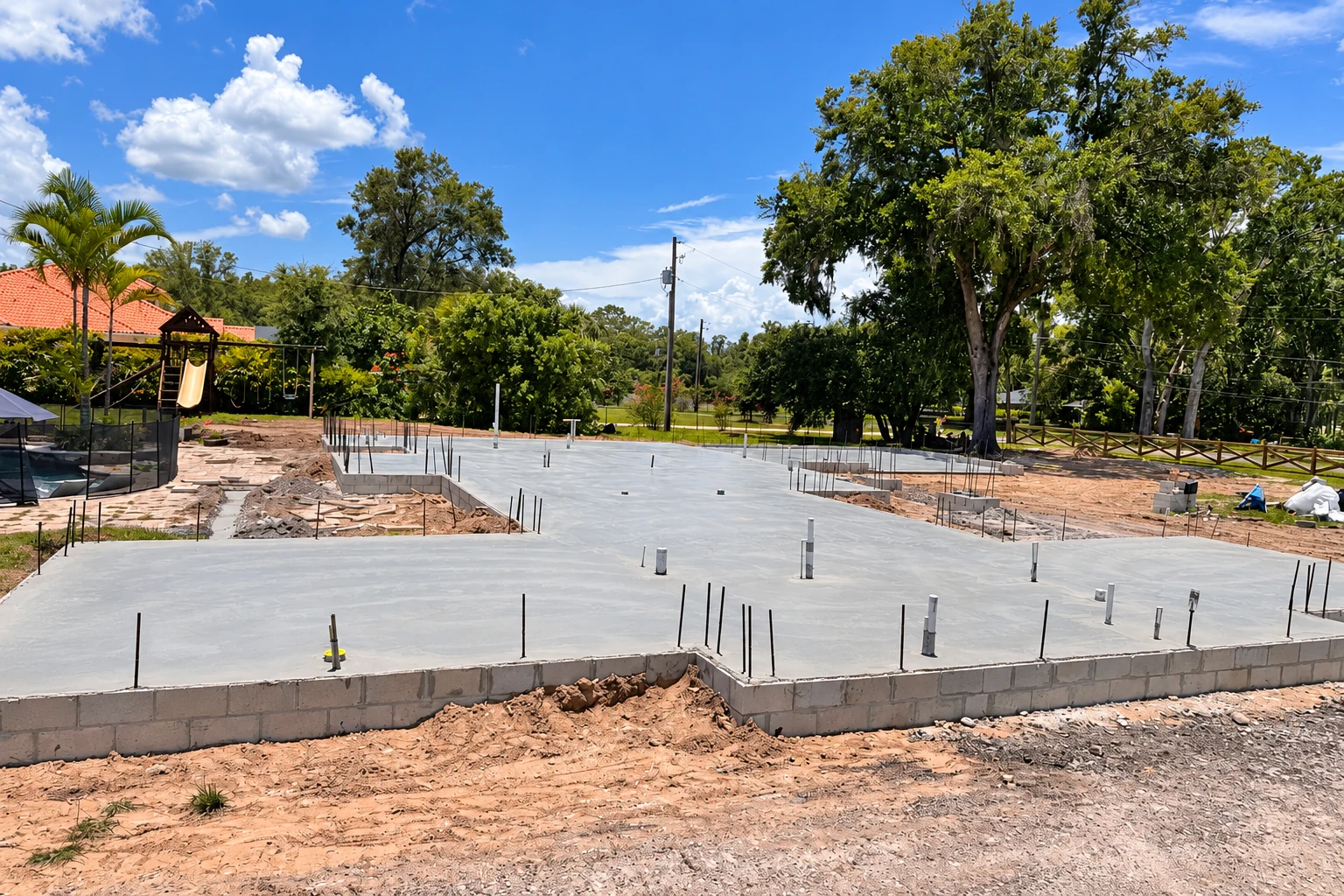
Foundation installation in Rock Springs WY - designed for your lot, slope and soil
Building on a lot and unsure what the ground will carry? We study the site first, then pour a foundation that suits it.
- Licensed and fully insured.
- Free in-person estimates.
- Replies within 1 business day.
Shallow foundation or a deeper one for your lot?
It mostly comes down to the house type, the slope and the soil, and I'd rather settle that on site than guess from a drawing.
A shallow foundation can work when:
- The house sits on a slab at ground level
- The lot has a gentle slope
- The soil drains and stays firm
- Groundwater sits well below the surface
- The yard plan keeps digging off the insulation
A deeper foundation is the better call when:
- The lot is steep
- The soil is heavy with clay or silt
- Groundwater sits close to the surface
- A soils engineer recommends it
- The plan calls for a basement or crawlspace
How your foundation gets built
Call or send the form
Call (307) 209-5832 or use the form. Tell us where the lot is and what you plan to build, and we'll set a time for me to come out.
A site visit set
I walk the lot with you
I come out myself to look at the ground, the slope and where the water runs, and we talk through the building you want. If the soil looks questionable, we bring in a soils engineer's advice.
A plan for your site
Your written estimate
You get the estimate in writing, with the design I'd suggest and what the job includes, so you can read it over and compare it with any others.
A written estimate
Pour day
Before the truck arrives, the digging, the packed base, the forms and the steel are all set and checked, so the pour goes calmly. I'm on site with our crew while we work.
A foundation poured
Curing and clean-up
From here the concrete sets the schedule, not us, because curing, the time fresh concrete needs to gain strength, can't be hurried. We protect it from the cold, grade the dirt and clean up.
A site ready to build
What foundation installation includes
Site walk and layout
I walk the lot with you, check the slope and mark out where the building will sit.
Soils advice when needed
When the ground looks wet or heavy, we get a soils engineer's advice before settling on a design.
Digging out
We dig to the depth the design calls for and remove soft soil the foundation shouldn't rest on.
A packed base
We compact the subgrade, the ground the concrete sits on, so it doesn't settle under the weight later.
Forms, steel and insulation
We set the forms and the rebar, the steel inside that holds the concrete together, plus insulation where the design calls for it.
The pour
We place the concrete into forms that are already checked, so the crew can focus on getting it right.
Grading and clean-up
We slope the dirt away from the walls so water drains off, then haul away our waste.
What drives the cost of a new foundation?
The biggest pieces are the size of the footprint and the design, since a deeper foundation means more digging, more forms and more concrete than a shallow one. The ground matters too. Soft, wet or uneven soil takes extra work to dig out and pack, and a sloped lot needs more forming. If a soils engineer has to weigh in, that's a cost of its own. Your written estimate spells out what's included.
Timing shapes the price and the schedule. A pour pushed up against the freeze needs more work to keep the fresh concrete warm, and I'd rather move a date than rush it. The one place I won't help you save is the base, because nobody sees it on day one and you'll live with it as long as you own the house.
Why Rock Springs owners call us for foundations
I come out to every job myself and write the estimate, and our crew does the work with me on site. Before I suggest a design, I look closely at the lot, the slope and the ground, and we bring in a soils engineer's advice when the site calls for it. We're licensed and fully insured, and we've been in business since 2017.
The ground here gives us another reason to slow down. Rock Springs is built over a network of old underground coal mines, and as those voids break down, the ground above can shift or collapse. We're based in Rock Springs and work in Green River and the cities around it, and property owners also call us for concrete footings and concrete parking lot building.
- The owner on site while we work
- A written estimate before we start
- Satisfaction guaranteed on every job
Get a written estimate for your foundation
Send your address, the lot's slope, any soils report and your move-in date. We reply within one business day, then I walk the lot with you for a free, no-obligation written estimate.
(307) 209-5832Foundation questions we hear
Can a shallow foundation work on my lot in Rock Springs?
It can if you're building a slab home on a lot with a moderate to low slope, which is where the builder's guide says a frost-protected shallow foundation fits best. That design uses insulation in the ground to keep the soil around the house warmer, so the guide says a foundation as shallow as 16 inches can work in almost all of the continental U.S., and a slab version can go in with one pour. I'd still walk your lot and check the soil before saying yes.
How do I know if my lot needs a soils engineer?
If your ground is high in silt or clay and the water table sits high, you may need a soils engineer's input before choosing a design. One building guide notes that kind of soil tends to shift with frost and may not suit a shallow foundation. When I see signs of it on the walk, we bring that advice in before we suggest anything.
What is the best time of year to pour a foundation in Rock Springs?
The best time is early enough that the foundation is finished and the building is closed in and heated before freezing weather, the same as with a conventional foundation. The industry's cold-weather guide treats concrete work as cold-weather work once the air falls, or is expected to fall, below 40°F while the fresh concrete still needs protecting, and that protection adds work. We plan start dates so the building can be closed in before it freezes.
Is my Rock Springs neighborhood known for sinking ground?
It may be, since a local news report lists the Tree Streets neighborhood, Dewar Drive, Skyline Village, Ridge Avenue, Blairtown and downtown as areas known for subsidence, or sinking ground. That's a list of areas, not a ruling on any single lot, so being on it or off it doesn't settle your site. With the old mines under the city, it's one more reason I look closely at the ground before suggesting a design.
Can I insure my home in Rock Springs against subsidence?
Yes, the Wyoming Department of Environmental Quality offers homeowner's subsidence insurance to people who own property in a community affected by current or past mining. Since Rock Springs sits over old coal mines, it's worth contacting the department about your property before you build.
How much does foundation installation cost in Rock Springs?
A foundation is priced to your site, so I give you a written estimate after I walk the lot instead of a number over the phone. A slab home on a gentle slope with firm, dry soil usually comes in lower than a steep lot with wet clay, which needs more digging, more forming and maybe a soils engineer. Call (307) 209-5832 and we'll set up a visit.
Areas we serve around Rock Springs
We're based in Rock Springs and also pour foundations in Green River. Pick your city below, or call (307) 209-5832 if yours isn't listed.
Get your foundation quote from Rock Springs Concrete
Call (307) 209-5832 or send the form, and have your building plans handy for the site walk.